What the two parties believe, what “conservative” and “liberal” mean, how we got here, how the system works, and both sides of the issues voters care about most. Each side is described the way its own supporters would describe it.
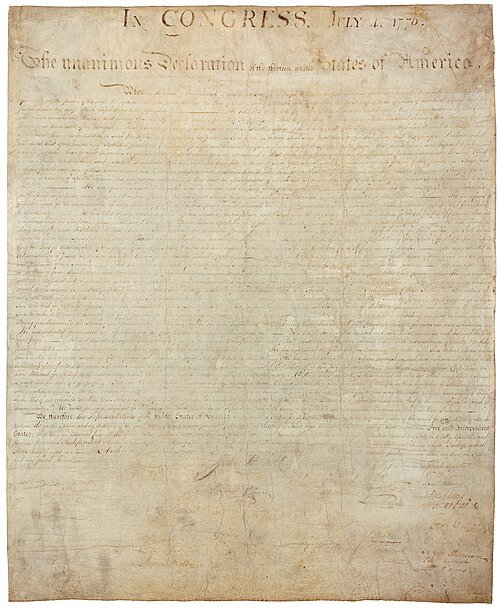
Thirteen stripes for the original colonies, fifty stars for the states.The Declaration of Independence, 1776
“We hold these truths to be self-evident, that all men are created equal…”
Written mainly by Thomas Jefferson. It explains why the colonies broke from Britain.
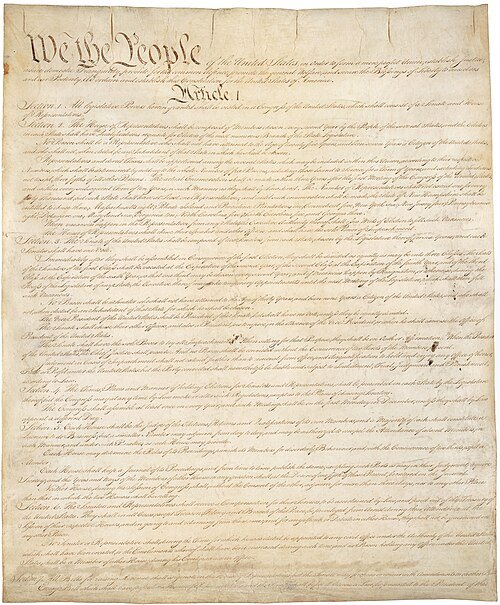
The Constitution, 1787
“We the People of the United States, in Order to form a more perfect Union…”
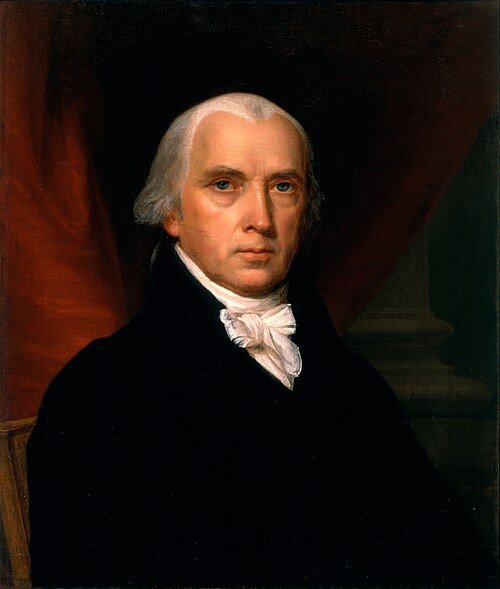
The rulebook for the government: who makes laws, who enforces them, who judges them. James Madison is called its father.
The Federalist Papers, 1787–88
“If men were angels, no government would be necessary.”
James Madison, Federalist No. 51, arguing for checks and balances so no part of government gets too powerful.
The two parties
A political party is a group of people who share ideas about how the country should be run and who work together to win elections. The United States has many small parties, but two big ones have won almost every national election since the 1850s: the Republican Party and the Democratic Party.
Why only two? Most U.S. elections are winner-take-all: the candidate with the most votes wins the whole seat, and second place gets nothing. That pushes voters to choose between the two strongest options, so smaller parties rarely win. Many democracies that give seats in proportion to votes have more parties.
Republicans
Also called the GOP (“Grand Old Party”)
Most Republicans generally believe:
Government should be smaller, with lower taxes and fewer rules on businesses, so people and companies keep more of what they earn.
Families, churches and local communities, not Washington, should solve most problems.
A strong military keeps the country safe.
Borders should be tightly controlled.
Traditional values, including religious freedom and the right to own guns, should be protected.
Republicans tend to do best in rural areas and small towns, among evangelical Christians, and increasingly among voters without a college degree.
Democrats
Most Democrats generally believe:
Government should actively help people, through programs like health coverage, Social Security and public schools.
Wealthy people and large companies should pay a bigger share of taxes.
Rules are needed to protect workers, consumers and the environment.
The country should welcome immigrants and offer a path to citizenship to many who are already here.
Civil rights should be protected and expanded, including abortion rights and voting access.
Democrats tend to do best in cities, among Black and many Hispanic voters, among younger voters, and increasingly among voters with a college degree.
These are general tendencies. Millions of Americans agree with one party on some issues and the other party on others, and each party has its own internal arguments.
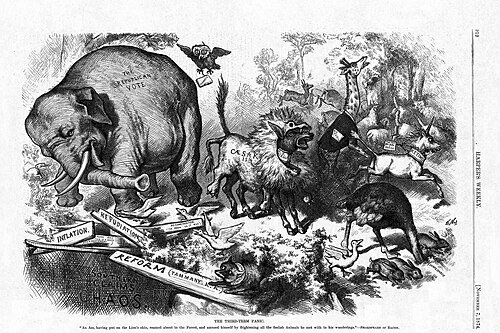
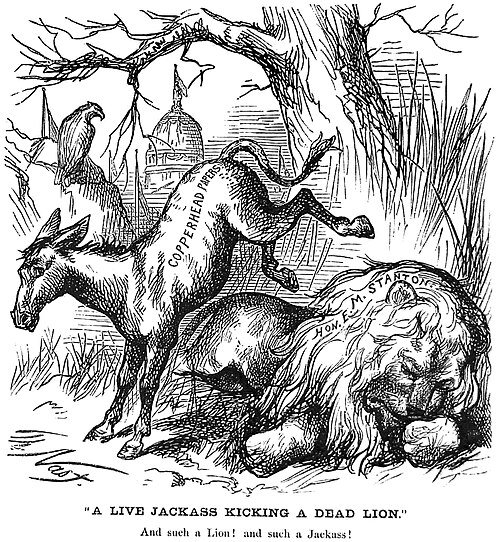
Why a donkey and an elephant? The donkey and the elephant come from cartoons. Opponents called Andrew Jackson a “jackass” in 1828, and he adopted the donkey. In the 1870s, cartoonist Thomas Nast drew the Democratic donkey and the Republican elephant in Harper’s Weekly, and both parties kept them.
Conservative, liberal and the words in between
Conservative
Someone who wants to keep what has worked and change things slowly. In the U.S. today, conservatives usually favor smaller government, lower taxes, free enterprise, a strong military and traditional social values. Most conservatives vote Republican.
Liberal (or progressive)
Someone who wants government to play a bigger role in fixing problems like inequality, discrimination and lack of health care. Liberals usually favor more social programs, more regulation of business, and expanding individual rights. Most liberals vote Democratic. “Progressive” usually means further to the left.
Moderate
Someone in the middle, who picks ideas from both sides depending on the issue. Many voters describe themselves this way.
Libertarian
Someone who wants as little government as possible on both money and personal choices: low taxes and few rules, but also few limits on how people live. Libertarians often vote Republican but disagree with both parties.
Independent
A voter who doesn’t belong to either party. In many recent surveys, more Americans call themselves independent than Republican or Democrat, though most independents lean toward one party when they vote.
Left and right
Shorthand from the French Revolution, when supporters of change sat on the left of the assembly and supporters of the king on the right. “Left” today means liberal; “right” means conservative.
How the parties got here
Every president since 1789, by partyDemocratic Republican Whig Democratic-Republican Federalist No party
Since Lincoln took office in 1861, Republicans have held the presidency for about 93 years and Democrats for about 72.
1790s
The first parties
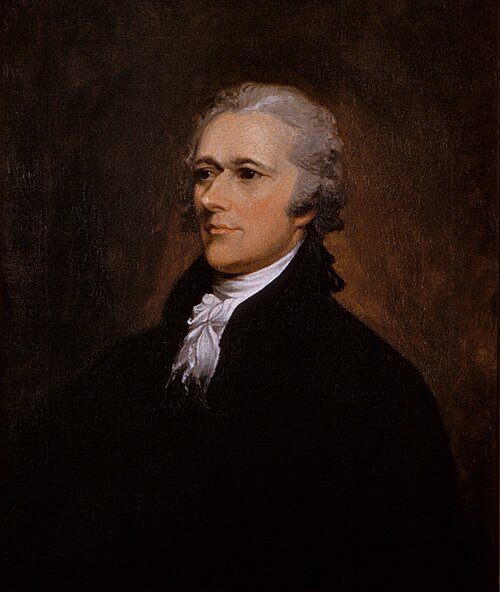
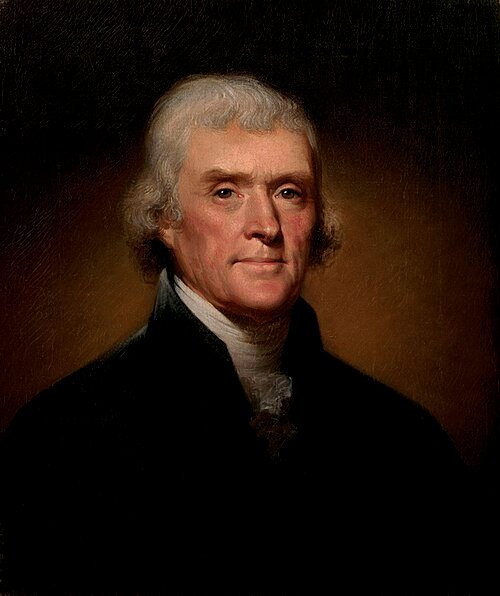
Alexander Hamilton’s Federalists wanted a strong national government; Thomas Jefferson’s Democratic-Republicans wanted power kept closer to the states and farmers. George Washington warned against parties, but they formed anyway.
“It serves always to distract the public councils and enfeeble the public administration.”George Washington on political parties, Farewell Address, 1796
Alexander HamiltonThomas Jefferson
1828
The Democratic Party
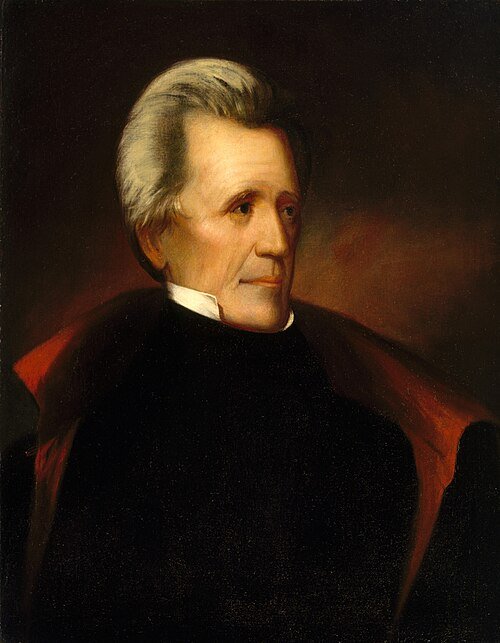
Andrew Jackson’s supporters formed the Democratic Party, today the oldest political party in the world still active.
Andrew Jackson
1854–1865
Republicans and the Civil War
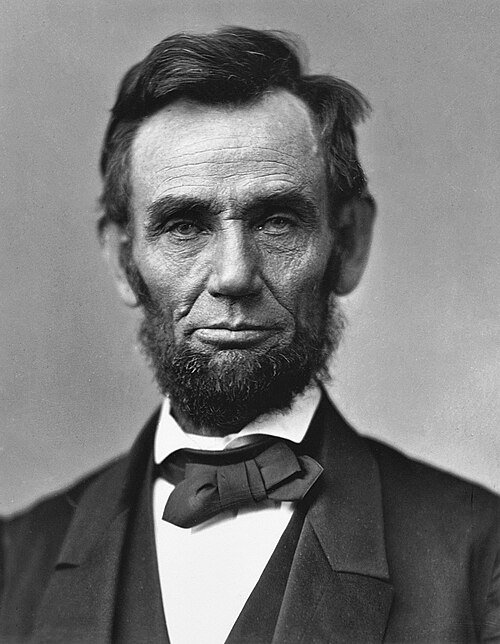
The Republican Party was founded to stop slavery from spreading into new territories. Its first president, Abraham Lincoln, led the Union through the Civil War, and slavery was abolished in 1865.
“…government of the people, by the people, for the people, shall not perish from the earth.”Abraham Lincoln, Gettysburg Address, 1863
Abraham Lincoln
1870s–1920s
A divided map
After the war, the South voted almost entirely Democratic for nearly a century. Republicans were strongest in the North and were known as the party of business and industry.
1932
The New Deal
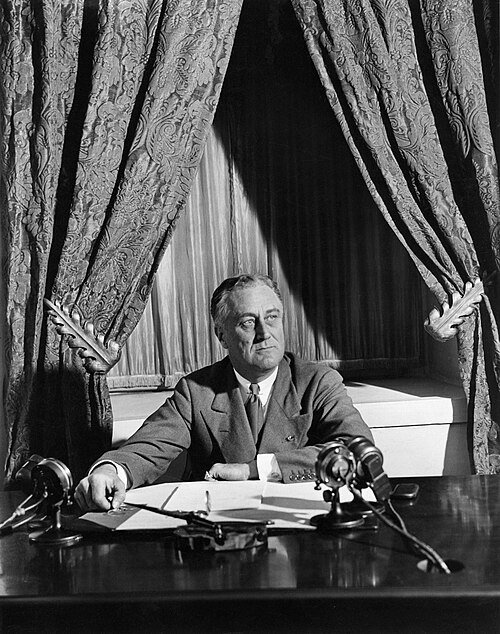
During the Great Depression, Democrat Franklin D. Roosevelt created programs like Social Security and built a coalition of workers, city voters, immigrants and the South. Democrats became the party of a more active government.
“The only thing we have to fear is fear itself.”Franklin D. Roosevelt, first inaugural address, 1933
Franklin D. Roosevelt
1960s
Civil rights and the big switch
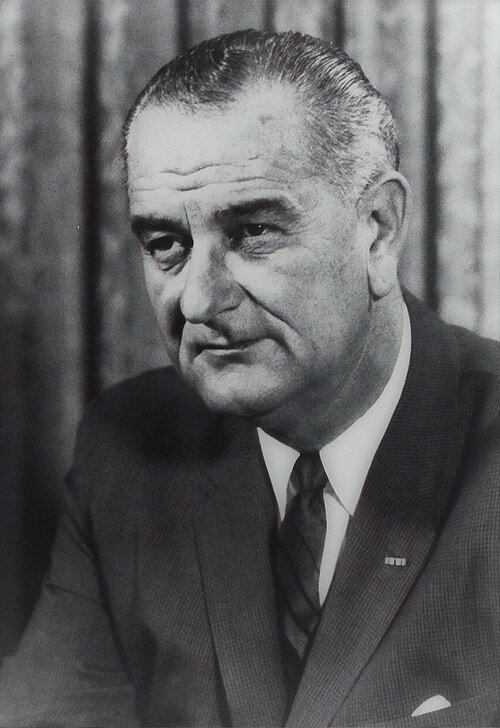
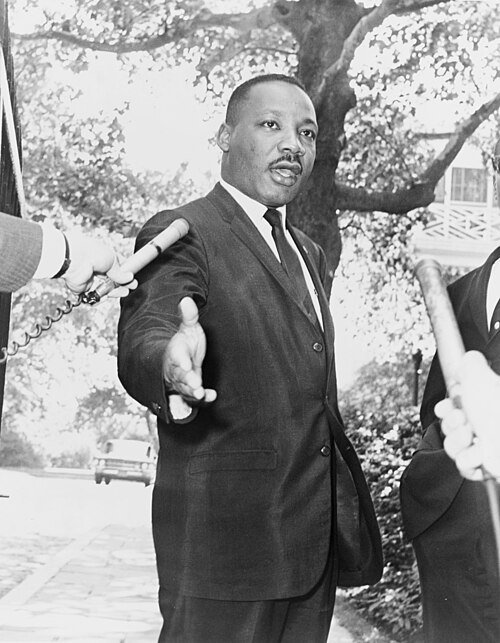
Democratic presidents signed the Civil Rights Act (1964) and Voting Rights Act (1965), with votes from both parties. Over the following decades, many white Southern conservatives moved to the Republican Party, and the South became Republican territory. This is why the parties of Lincoln’s time and today’s parties look so different.
“And we shall overcome.”Lyndon B. Johnson, asking Congress to pass the Voting Rights Act, 1965
Lyndon B. JohnsonMartin Luther King Jr.
1980
The Reagan era
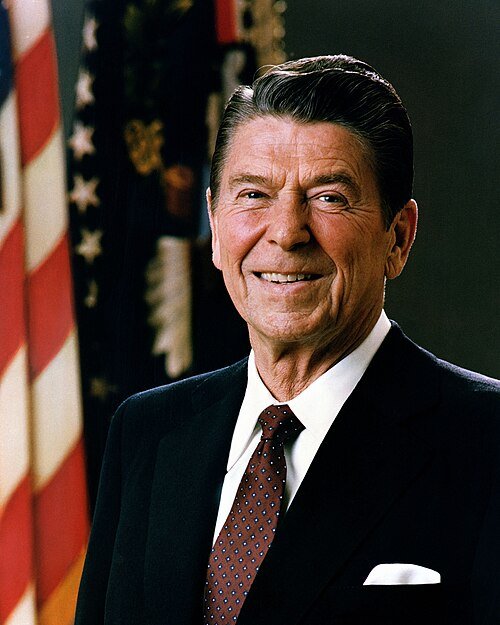
Republican Ronald Reagan won on lower taxes, smaller government, a strong military and traditional values, shaping conservative ideas for a generation.
“Government is not the solution to our problem; government is the problem.”Ronald Reagan, first inaugural address, 1981
Ronald Reagan
1990s–2010s
Clinton, Bush, Obama
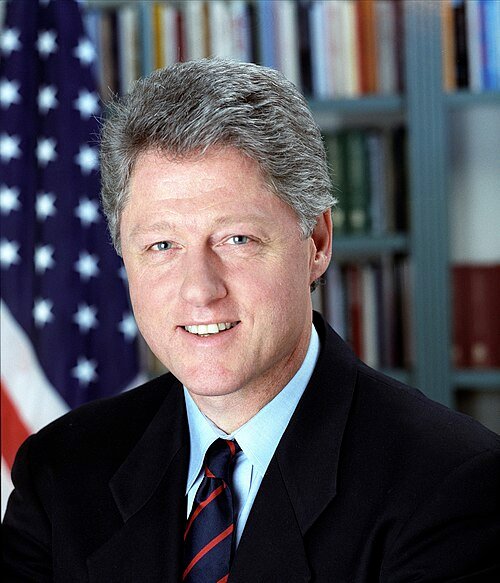
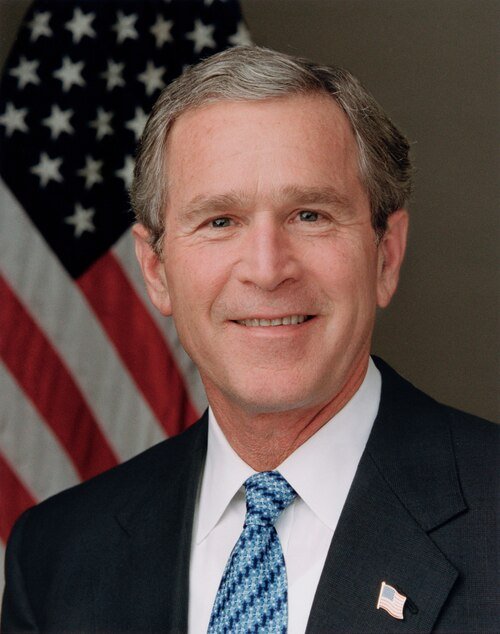
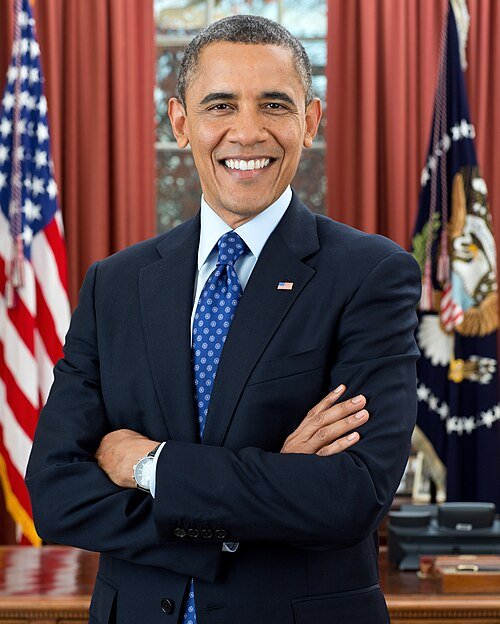
Democrat Bill Clinton moved his party toward the center on budgets and trade. Republican George W. Bush led the response to the September 11 attacks. Democrat Barack Obama passed the Affordable Care Act, the biggest change to health coverage in decades.
“The era of big government is over.”Bill Clinton, State of the Union, 1996
Bill ClintonGeorge W. BushBarack Obama
2016–today
A new realignment
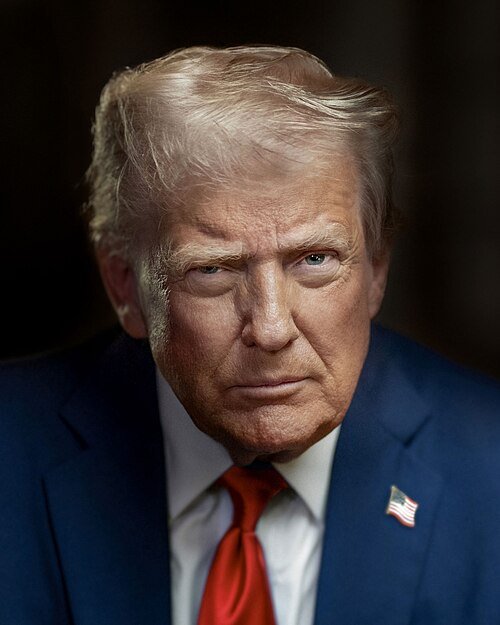
Republican Donald Trump turned his party toward tariffs, tougher immigration rules and skepticism of foreign wars and trade deals, drawing more working-class voters. Democrats gained among college-educated suburban voters. Both parties are still changing.
“Make America Great Again.”Donald Trump’s campaign slogan, first used in 2016 (it echoes Reagan’s 1980 “Let’s Make America Great Again”)
Donald Trump
How the country grew
Land added, 1783–1898Land added to the United States, in square miles; circle area shows size
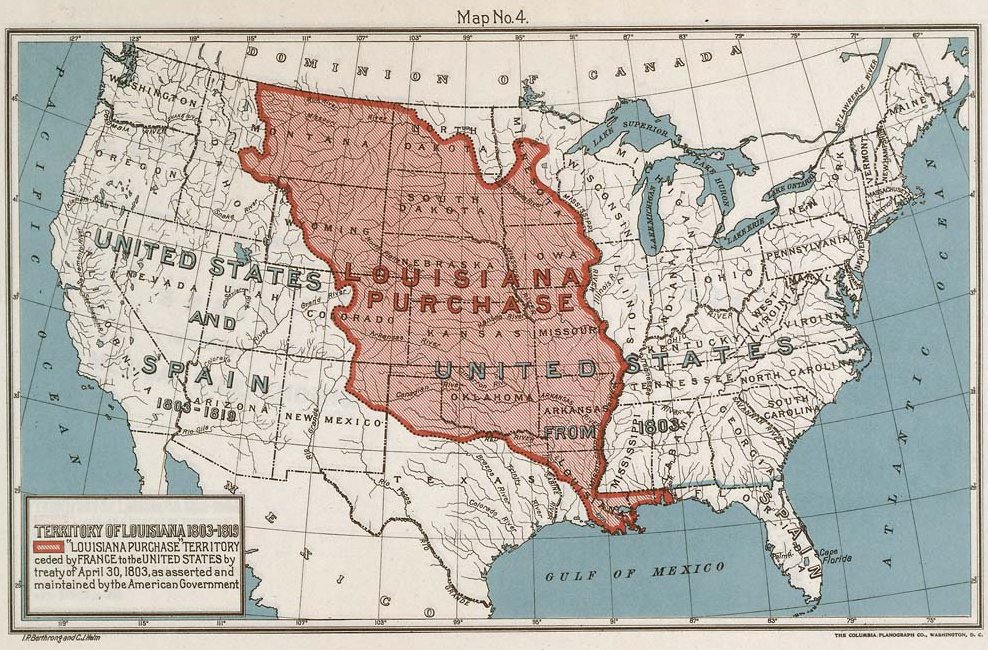
The Louisiana Purchase nearly doubled the country in 1803, for about $15 million. Alaska, bought from Russia in 1867 for $7.2 million, added another fifth.
U.S. Census Bureau, areas of the territorial acquisitions. Numbers are square miles.
From 13 states to 50
The first 13 joined by 1790. The last two, Alaska and Hawaii, became states in 1959.
The Louisiana Purchase, 1803Bought from France for about $15 million, it stretched from the Mississippi River to the Rocky Mountains.
America and the world
1783
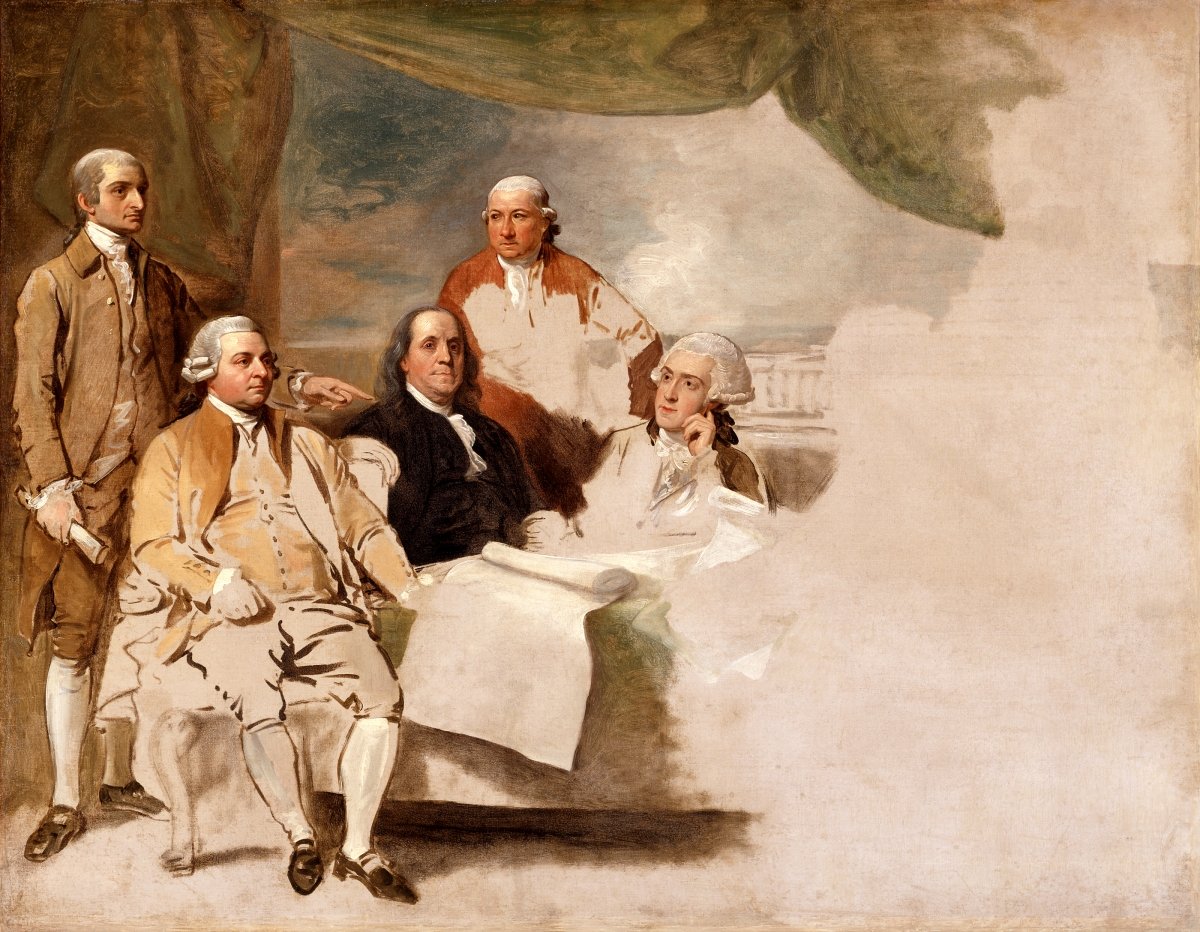
Treaty of Paris
Britain recognized American independence, ending the Revolutionary War.
1823
Monroe Doctrine
President James Monroe warned European powers not to colonize the Americas further, a principle that shaped U.S. policy for a century.
1917
World War I
The U.S. entered the war in Europe. Afterward, the Senate rejected joining the League of Nations, and the country turned inward.
1945
The United Nations
After World War II, the U.S. helped found the United Nations to prevent another world war, and holds one of five permanent seats on its Security Council, with a veto.
1948
The Marshall Plan
The U.S. spent about $13 billion, roughly $170 billion in today’s money, rebuilding Western Europe.
1949
NATO
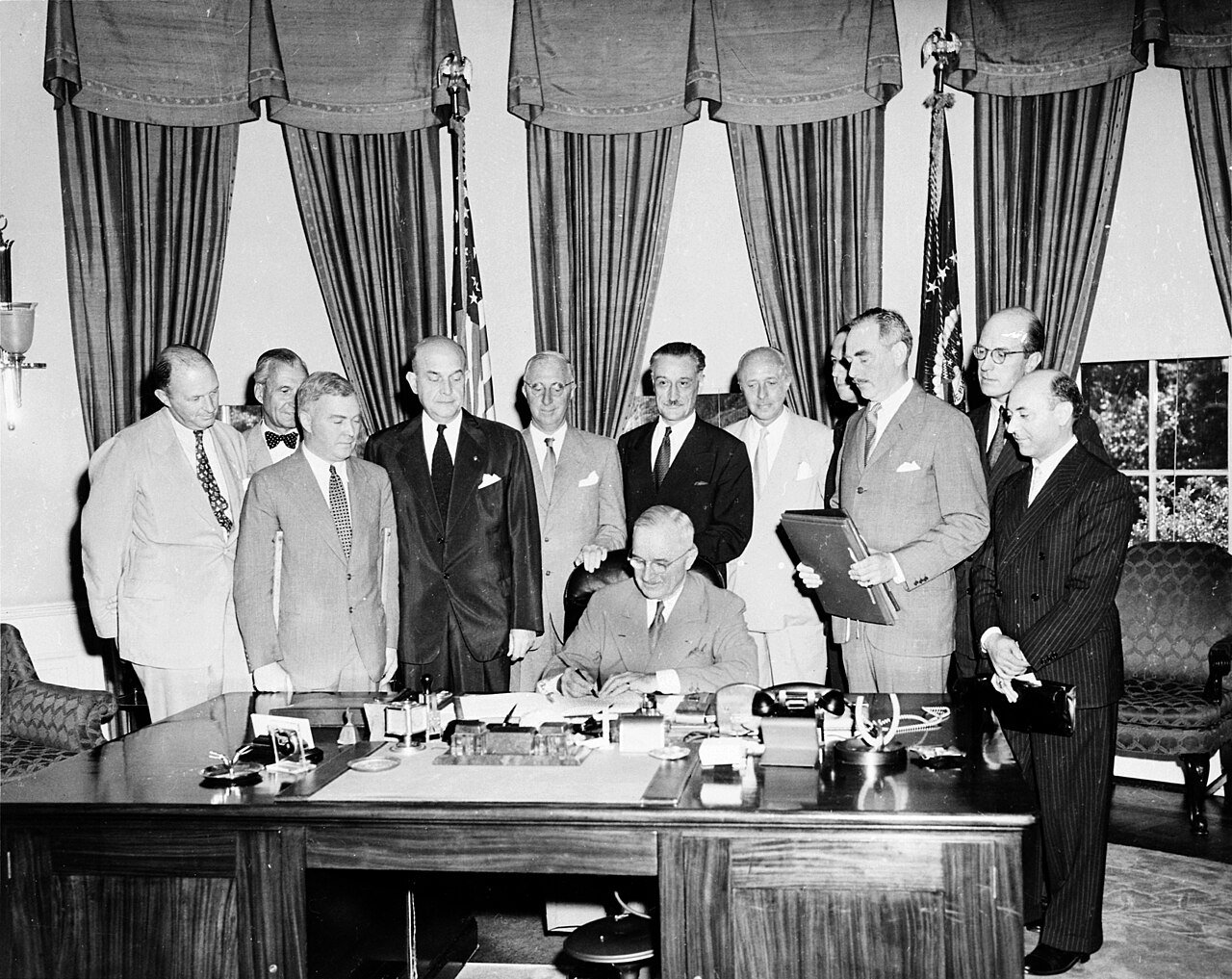
Twelve countries, led by the U.S., promised to defend each other: an attack on one is an attack on all. The alliance has grown to 32 members.
1991
End of the Cold War
The Soviet Union collapsed, leaving the U.S. as the world’s only superpower.
2001
After September 11
NATO invoked its mutual-defense clause for the first and only time, in support of the United States after the attacks.
NATO, from 12 members to 32
1949 Founded by 12, including the U.S., Canada, Britain and France
1952 Greece and Turkey
1955 West Germany
1982 Spain
1999 Czech Republic, Hungary, Poland
2004 Seven Central and Eastern European countries
2009 Albania, Croatia
2017 Montenegro
2020 North Macedonia
2023 Finland
2024 Sweden
How the system works
Three branches, each checking the othersThe Constitution splits power so no one part of government can act alone.
Congress
Makes the laws
House: 435 members · Senate: 100
Checks on the others
Can override a veto
Approves judges and treaties (Senate)
Can impeach the president or judges
The president
Enforces the laws
Elected every four years
Checks on the others
Can veto bills
Nominates judges
Commands the military
The courts
Interpret the laws
Supreme Court: nine justices, for life
Checks on the others
Can strike down laws that break the Constitution
Can rule a president’s actions illegal
The Electoral College: 538 votes, 270 to winEach square is a state, darker for more electoral votes. Electoral votes for the 2024, 2028 and 2032 elections, based on the 2020 census.
California, Texas, Florida and New York together hold 152 electoral votes, more than half of the 270 a candidate needs. Six states and Washington, D.C., have the minimum of three.
Americans don’t elect the president directly. Each state gets as many electors as it has members of Congress, and Washington, D.C., gets three. In almost every state the winner of the popular vote takes all of its electors, which is why a few close “swing states” get most of the attention.
How a bill becomes law
IdeaA member of Congress introduces a bill
HouseMajority vote: 218 of 435
SenateUsually 60 of 100 to pass a filibuster, then a majority
PresidentSigns it, or vetoes it
LawOr, after a veto, two-thirds of both chambers
Congress
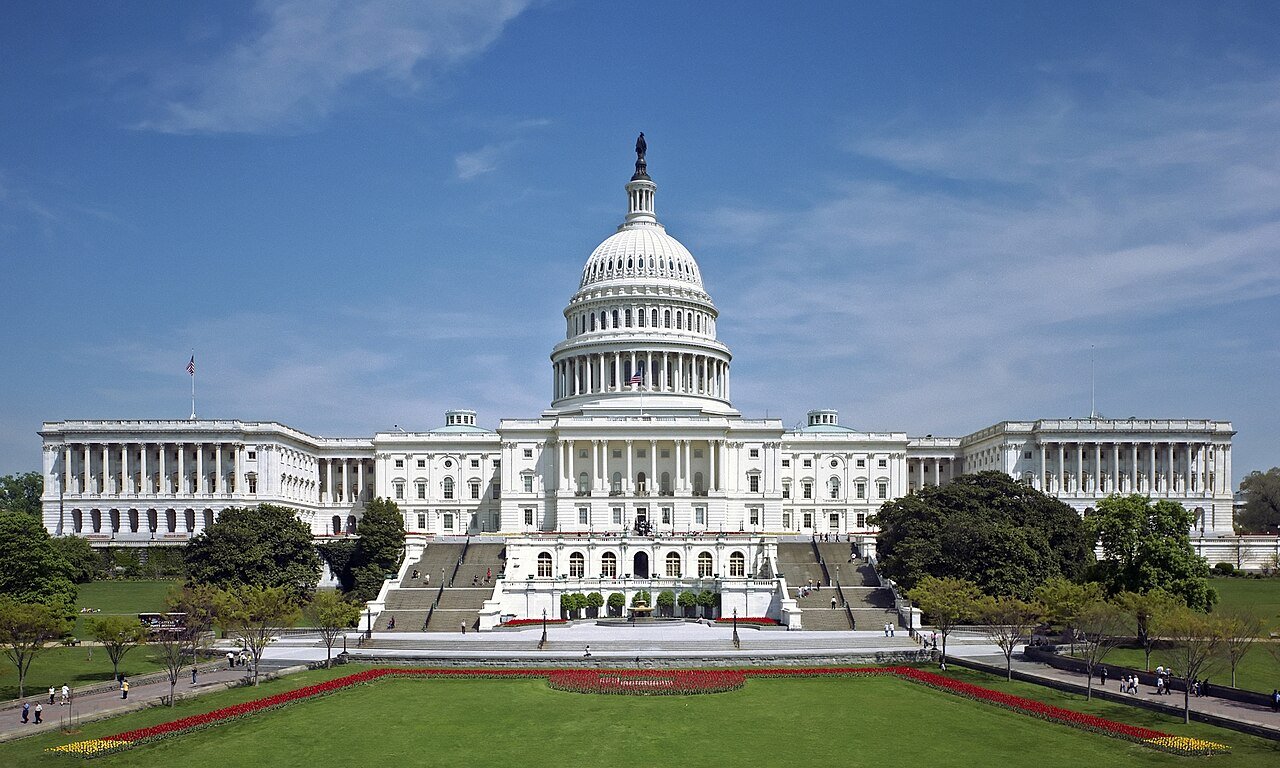
Congress writes the laws. It has two parts: the House of Representatives, with 435 members chosen by population and elected every two years, and the Senate, with two senators per state (100 in total) elected for six-year terms. Control of each chamber decides which bills get a vote.
The president
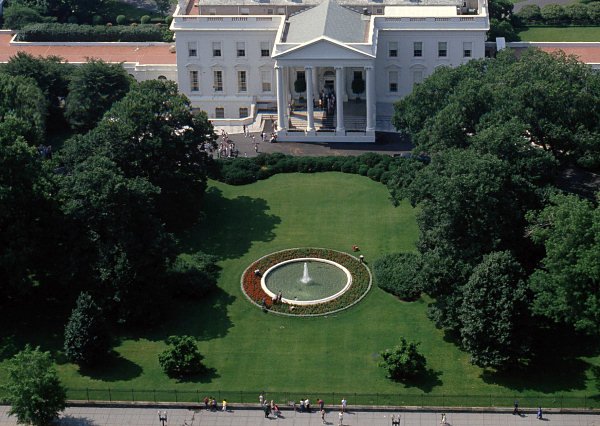
The president enforces the laws, leads the military, picks Cabinet members and judges, and can veto (block) bills, though Congress can override a veto with two-thirds of both chambers. A president serves four-year terms, at most two.
The courts
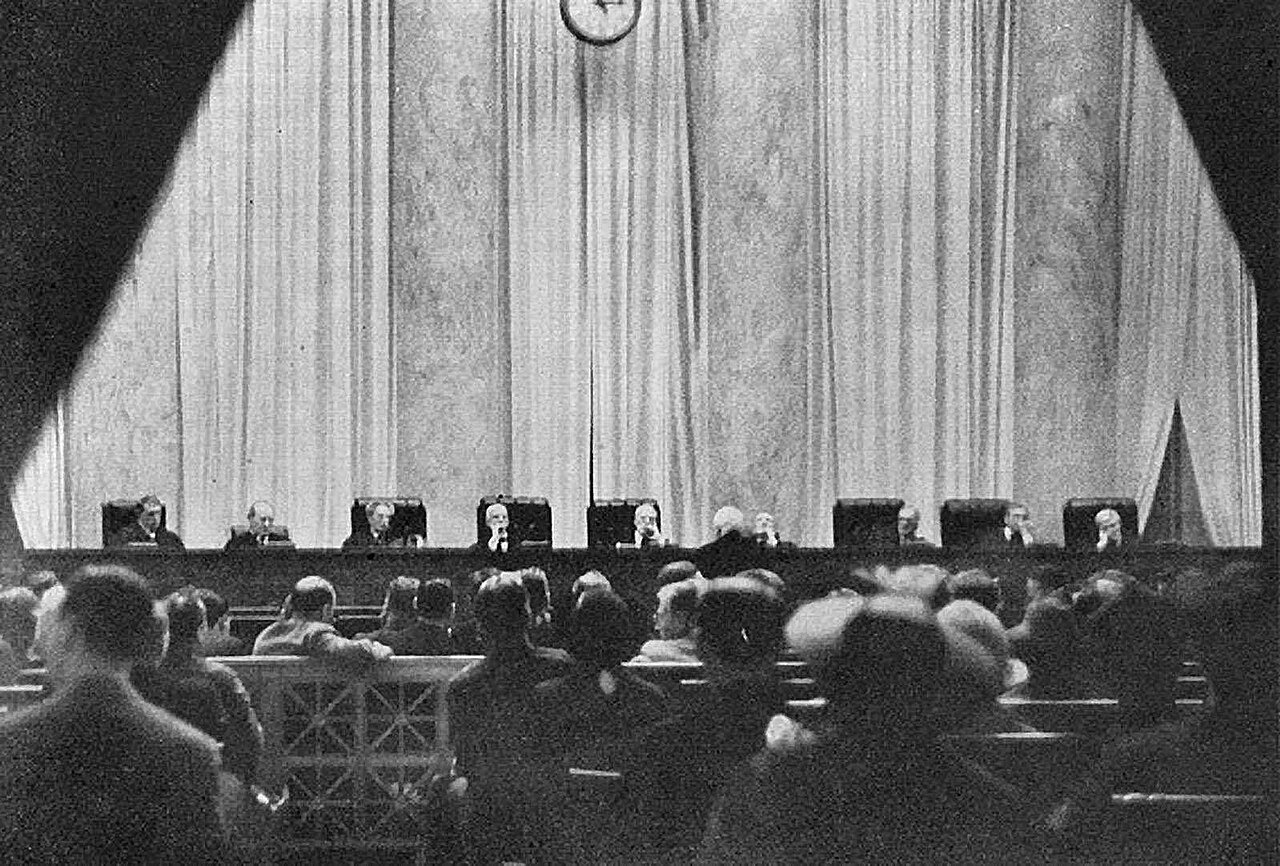
Federal courts decide what laws mean and whether they follow the Constitution. The Supreme Court has nine justices, nominated by the president and approved by the Senate. They serve for life.
The filibuster
In the Senate, most bills need 60 of 100 votes to end debate and move to a final vote. That rule, the filibuster, means the majority party usually needs some votes from the other side.
Primaries and general elections
In a primary, members of a party choose their candidate. In the general election in November, voters choose between the parties’ candidates. Primary voters tend to be more strongly partisan than general-election voters.
Midterm elections
Halfway through a president’s term, all House seats and about a third of Senate seats are up for election. The president’s party usually loses seats in midterms.
The big issues, both sides
Each issue: the question in one sentence, what many Republicans and many Democrats say in their own terms (the order alternates), the numbers both sides argue over, and where Americans stand.
The economy and taxes
How much should people and companies pay in taxes, and how big should the government be?
Many Republicans say
Lower taxes let families keep more of their paychecks and help businesses invest and hire. Government spends too much and regulates too much, which slows growth and adds to the national debt. Cutting spending and red tape is the best path to more jobs and higher wages.
Many Democrats say
Wealthy people and large corporations should pay a fairer share, and that money should fund things working families need, like child care, health care and roads. Government investment helps the economy grow, and tax cuts for the rich mostly add to the debt without helping average workers.
The numbers
The federal government spent $7.57 trillion in the last fiscal year and took in $5.40 trillion. Individual income taxes brought in 53% of that money. The gap is borrowed.
Federal surplus or deficit, share of the economy: -5.8%. Lower than in 87% of the record since 1929.
Office of Management and Budget
Where Americans stand For decades, Gallup surveys have found that more Americans say upper-income people pay too little in taxes than say they pay too much.
Health care
Who should pay for health care, and how much should the government be involved?
Many Democrats say
Health care should be affordable for everyone. Many Democrats want to protect and expand the Affordable Care Act and Medicaid, let Medicare negotiate lower drug prices, and some favor a government insurance option or “Medicare for All.”
Many Republicans say
Competition and choice lower costs better than government programs do. Many Republicans want to replace parts of the Affordable Care Act, give states more control over Medicaid, and expect able-bodied adults on Medicaid to work or train for work.
The numbers
Medicare and other federal health programs, including Medicaid, take 28% of all federal spending, more than defense.
U.S. Treasury, Monthly Treasury Statement
Where Americans stand In Gallup surveys over many years, about half or more of Americans have said it is the federal government’s job to make sure everyone has health coverage, though they disagree on how.
Immigration
How many people should be allowed to move to the U.S., and what should happen to those here illegally?
Many Republicans say
The border must be secured first. Many Republicans want tougher enforcement, deportation of people living in the country illegally, limits on asylum claims, and immigration based more on skills. Uncontrolled immigration, they argue, strains public services and lowers wages for some workers.
Many Democrats say
The border should be secure, but the system should also be humane. Many Democrats support a path to citizenship for long-time residents, especially people brought here as children (“Dreamers”), protecting the right to seek asylum, and legal immigration to fill jobs and grow the economy.
The numbers
The share of people living in the U.S. who were born in another country is about 14%, close to its record from the 1890s and 1910s and up from under 5% in 1970.
18509.7%
187014.4%
189014.8%
191014.7%
193011.6%
19506.9%
19704.7%
19907.9%
201012.9%
202314.3%
U.S. Census Bureau, decennial census and American Community Survey
Where Americans stand Gallup has found that most Americans say immigration is a good thing for the country overall, while views on whether it should increase or decrease swing widely from year to year.
Abortion
Should abortion be legal, and who should decide: the states or the national government?
Many Democrats say
Women should be able to make their own decisions about pregnancy. Many Democrats want a national law restoring the protections of Roe v. Wade, which the Supreme Court overturned in 2022, and to protect access to birth control and fertility treatments such as IVF.
Many Republicans say
Life begins at conception and should be protected. Many Republicans welcomed the Supreme Court’s 2022 Dobbs decision, which ended the national right to abortion and let each state set its own rules. They differ on whether there should also be national limits, and most support exceptions in some cases.
Where Americans stand Gallup has found for decades that most Americans fall in between: they say abortion should be legal in some circumstances but not all. Smaller groups say it should be legal in all cases or illegal in all cases.
Guns
How much should the government limit who can own guns and what kinds?
Many Republicans say
The Second Amendment protects every law-abiding American’s right to own guns, including for self-defense. New restrictions mostly burden law-abiding owners, not criminals. Republicans tend to focus on enforcing existing laws, school security and mental health.
Many Democrats say
Too many Americans die from gun violence. Many Democrats support background checks on all gun sales, “red flag” laws that let courts temporarily take guns from people judged dangerous, and limits on military-style rifles, while respecting the right to own guns.
The numbers
Murders in U.S. cities are down 16.6% this year compared with the same months last year.
The U.S. homicide rate is higher than in most other wealthy countries:
Mexico24.9
Brazil19.3
United States5.8
Turkey3.2
Canada2
France1.3
United Kingdom1.1
Germany0.9
Homicides per 100,000 people. UN Office on Drugs and Crime via World Bank; Real-Time Crime Index
Where Americans stand Surveys usually find more Americans want stricter gun laws than want looser ones, while large majorities oppose banning handguns.
Climate and energy
How should the country produce its energy, and how much should it do about climate change?
Many Democrats say
Climate change is a serious threat that needs action now. Many Democrats want to cut greenhouse gas emissions, invest in solar, wind and electric vehicles, and create clean-energy jobs, arguing this also lowers costs over time.
Many Republicans say
The U.S. should produce more of its own oil, gas and coal to keep energy affordable and reduce reliance on other countries. Many Republicans see strict climate rules as costly to families and businesses, and prefer innovation over mandates.
The numbers
Gas price in today’s dollars: $4.36. Higher than in 81% of the record since 1990.
EIA; adjusted with CPI
Where Americans stand Pew Research surveys find most Americans want the country to develop both fossil fuels and renewable energy, with Republicans and Democrats far apart on how fast to move away from fossil fuels.
Education
Who should control schools and pay for college?
Many Republicans say
Parents should have more say over their children’s education. Many Republicans support school choice, letting public money follow students to private, religious or charter schools, more parental input on what is taught, and a smaller federal role in education.
Many Democrats say
Strong public schools are the backbone of opportunity. Many Democrats want more funding for public schools and teachers, universal pre-K, and making college more affordable through grants and student-loan relief.
Where Americans stand Americans are split on school choice programs, and most say they are satisfied with their own local school even when they are unhappy with education nationally.
Crime and policing
What is the best way to keep communities safe?
Many Democrats say
Communities are safest when police are well trained and trusted. Many Democrats support police along with accountability reforms, and investment in mental health, jobs and violence prevention to stop crime before it happens.
Many Republicans say
Support police, enforce the law and hold criminals accountable with tough sentences. Many Republicans argue that cutting police budgets and lighter penalties lead to more crime.
The numbers
Murders in U.S. cities are down 16.6% this year compared with the same months last year.
The U.S. homicide rate is higher than in most other wealthy countries:
Mexico24.9
Brazil19.3
United States5.8
Turkey3.2
Canada2
France1.3
United Kingdom1.1
Germany0.9
Homicides per 100,000 people. UN Office on Drugs and Crime via World Bank; Real-Time Crime Index
Where Americans stand Gallup has found that most Americans believe crime is rising nationally in most years, even in years when official data show it falling.
Trade
Should the U.S. tax imports to protect American jobs?
Many Republicans say
Today’s Republicans largely favor tariffs, taxes on imports, to protect American factories and jobs and to pressure other countries for better deals. This is a change: under Ronald Reagan and George W. Bush, Republicans mostly favored free trade.
Many Democrats say
Many Democrats support targeted tariffs, especially on China, and trade deals that protect workers and the environment, but argue broad tariffs raise prices for American families and businesses.
The numbers
Trade balance, share of the economy: -3.7%. Lower than in 88% of the record since 1947.
BEA; net exports ÷ GDP
Where Americans stand Americans are divided on tariffs, and views often shift with which party holds the White House.
Foreign policy and defense
How involved should the U.S. be in the rest of the world?
Many Democrats say
The U.S. is safer when it leads alliances such as NATO and works with other countries. Many Democrats support aid to allies such as Ukraine, diplomacy and international agreements, alongside a strong military.
Many Republicans say
“Peace through strength”: a powerful military deters enemies. Many Republicans, especially under the “America First” banner, are skeptical of foreign aid and long wars abroad and want allies to pay more for their own defense; others favor strong support for allies.
The numbers
U.S. defense spending, share of the economy: 3.7%. Lower than in 94% of the record since 1947.
BEA; national defense spending ÷ GDP
Where Americans stand Americans broadly support NATO, but are divided on how much aid to send to other countries.
Social Security and Medicare
How do we keep retirement and health programs for older Americans paid for?
Many Republicans say
Republican leaders today say they will protect benefits for current retirees, focusing on cutting waste and fraud and growing the economy. In the past, some Republicans proposed raising the retirement age or allowing private accounts.
Many Democrats say
Many Democrats want to protect and expand benefits and keep the programs funded by raising taxes on high earners, who currently stop paying Social Security tax above a yearly income limit.
The numbers
Social Security and Medicare together take 36% of all federal spending. As more Americans retire, both cost more each year.
U.S. Treasury, Monthly Treasury Statement
Where Americans stand Large majorities of Americans in both parties oppose cutting Social Security and Medicare benefits.
Test yourself
Which party was founded to stop the spread of slavery?
The Republican Party, in 1854. Abraham Lincoln was its first president.
How many votes does a candidate need in the Electoral College to become president?
270 of 538.
Why does the U.S. mostly have two big parties?
Most elections are winner-take-all, so voters gravitate to the two strongest options.
In the Senate, how many votes does a bill usually need to get past a filibuster?
60 of 100.
What did the Supreme Court’s 2022 Dobbs decision do?
It ended the national right to abortion and let each state set its own rules.
Is “conservative” the same thing as “Republican”?
No. One is a set of ideas, the other a party. Most conservatives vote Republican, but some Democrats are conservative and some Republicans are moderate or liberal.
Sources: the parties’ platforms, the U.S. Constitution and official government data, Gallup and Pew Research surveys. Last reviewed November 2026. Suggest a correction.